Overall, the decision reflects Microsoft’s broader strategy to centralize license management and user data through online services, prioritizing convenience and long-term control at the cost of flexibility for users who prefer offline or legacy setups.
Microsoft has quietly taken another step toward reducing offline software usage by discontinuing phone-based activation for both Windows and Office. This long-standing activation method, which had been available for decades, has now been replaced by an online-only process that requires a Microsoft account, marking the end of an era for many long-time users.
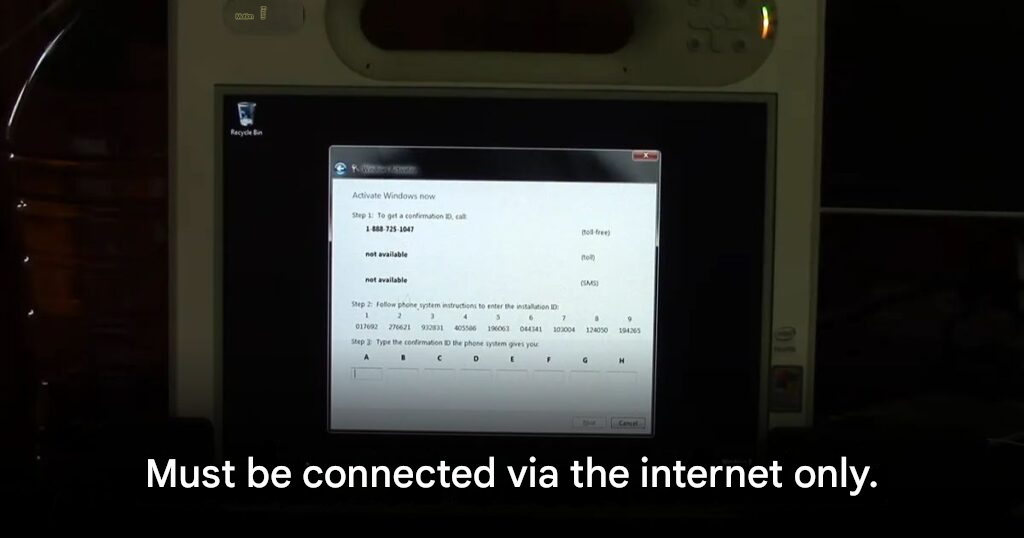
The change was revealed by technology YouTuber Ben Kleinberg, who tested the activation process for Windows 7 and Office 2010 by calling the phone numbers still listed in Microsoft’s official support documentation. Instead of receiving an activation code, the automated system informed him that product activation support had moved to an online platform.
After the call ended, Ben received an SMS containing a link to the Microsoft Product Activation Portal, a new web-based activation system. However, upon accessing the site, users are immediately required to sign in with a Microsoft account. This requirement effectively removes the concept of offline activation, as users must now connect to the internet and verify their identity through a centralized account.
During the process, Ben encountered a minor issue when using Firefox on an iPhone, where the activation code failed to display correctly. Switching to Safari on a laptop resolved the problem, and both Windows 7 and Office 2010 were successfully activated. This highlights that browser compatibility can still play a role in completing the activation process smoothly.
The need for this workaround arose because OEM product keys can no longer be activated directly within Windows 7 itself. The activation servers for the operating system are largely non-functional, leaving users who rely on legacy software with very limited options. For those seeking offline usage or operating systems without persistent internet access, the new web-based activation method is effectively the only remaining path.
The video concludes that phone-based activation has now truly come to an end. While Microsoft technically still provides an activation route through its website, the mandatory use of a Microsoft account has sparked dissatisfaction among many users. This move aligns closely with the direction of Windows 11, which increasingly pushes users toward online connectivity and account-based systems.
Overall, the decision reflects Microsoft’s broader strategy to centralize license management and user data through online services, prioritizing convenience and long-term control at the cost of flexibility for users who prefer offline or legacy setups.
Origin: Tomshardware