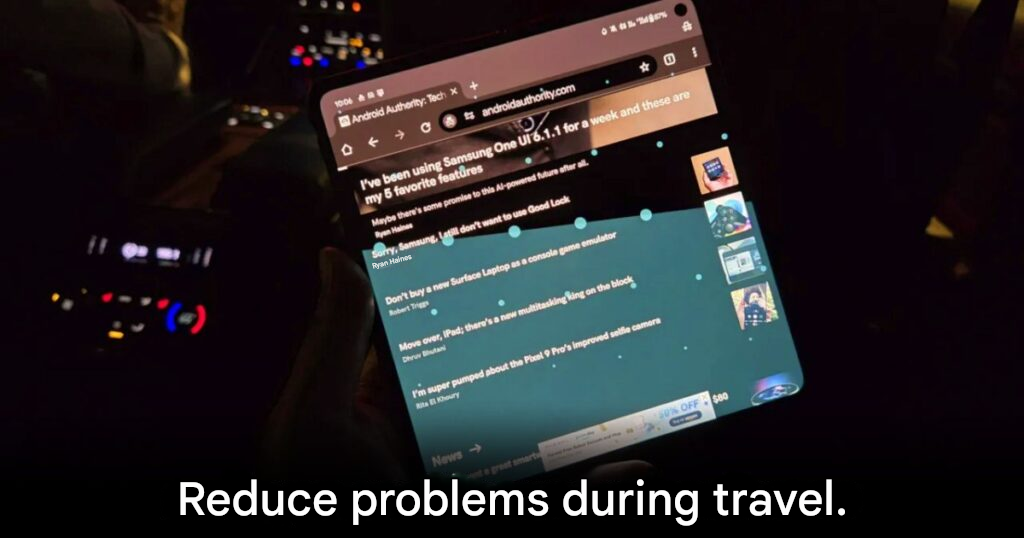
Google is developing a new feature for Android smartphones to help reduce motion sickness while using a phone in a moving vehicle. The feature, temporarily called Motion Cues, is designed to allow users to read content or watch videos comfortably without feeling nauseous, making it especially useful for long trips.
The core concept of Motion Cues addresses sensory conflict, which occurs when what your eyes see does not match what your balance system perceives, causing dizziness or nausea. Google’s solution involves adding small animated indicators along the edges of the screen, moving in sync with the vehicle’s motion. This helps the brain reconcile the visual information with the body’s actual movement, reducing discomfort.
While the idea is not entirely new. Apple introduced a similar feature in iOS 18, and third-party apps like KineStop have existed on Android for some time. Google plans to integrate Motion Cues directly into the operating system, eliminating the need for external apps and ensuring smoother, more reliable performance.
Code inspection in the Android Canary build indicates that Motion Cues is still in testing and currently disabled. Some limitations remain, such as the animated indicators disappearing when the notification bar is pulled down, when entering the settings menu, or on the lock screen, which reduces the feature’s effectiveness.
However, Google is expected to address this by creating a system-level Motion Cues API in SystemUI, allowing the feature to function consistently and efficiently. This major update is likely to arrive with Android 17, which is considered the most probable version to officially launch Motion Cues.
Source: Digitaltrends