Mobile Game Monetization Mistakes Developers Still Make in 2026
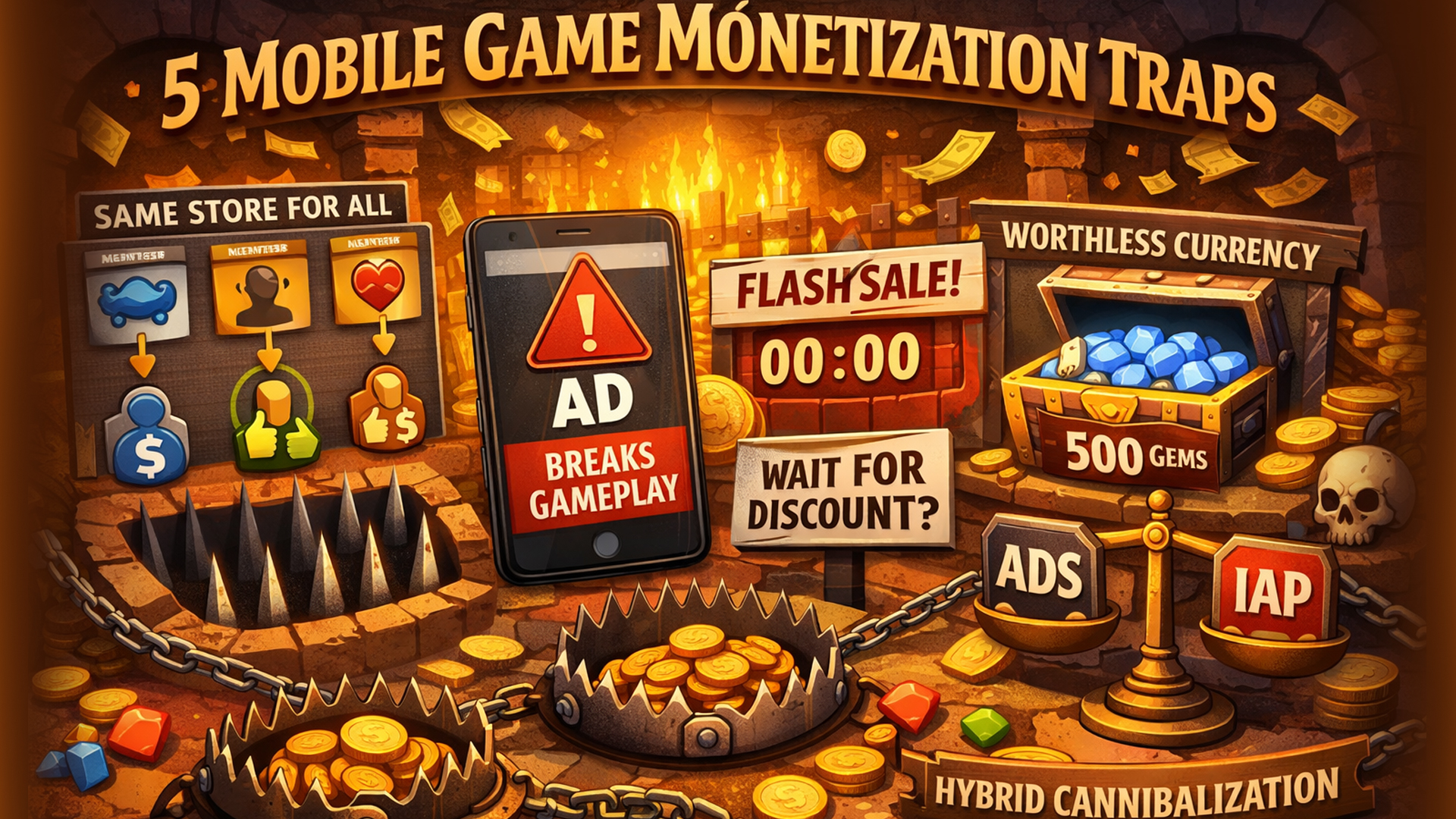
5 Mobile Game Monetization Traps That Quietly Kill Revenue
Mobile game monetization has matured, yet many studios still repeat the same mistakes that quietly erode revenue and damage player trust. According to Anton Slashcev, founder of LOOT, an executive producer and advisor with experience at Playrix and Belka Games, these issues rarely look dangerous at first glance. However, over time they reduce lifetime value, weaken retention, and stall growth. The insights below are based on industry discussions he shared together with Xsolla, highlighting five monetization traps studios should actively avoid.
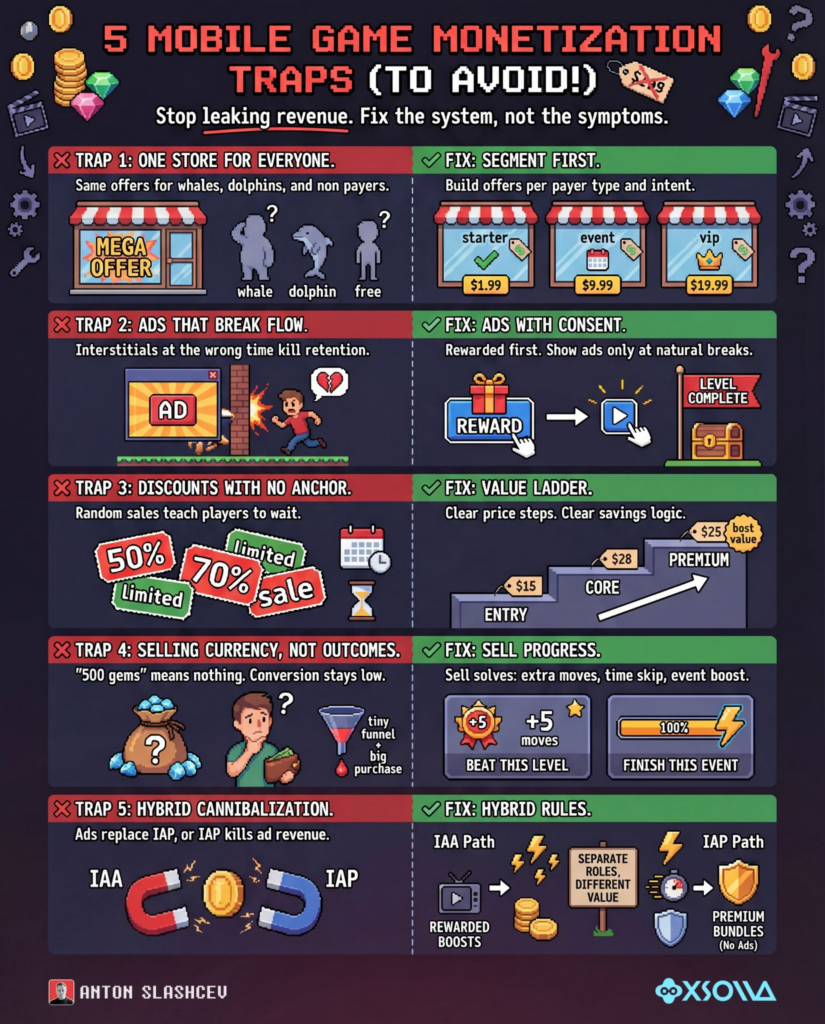
One Store for Everyone Is a Hidden Revenue Leak
Many games still present the same store offers to every player. This approach ignores the reality that whales, light spenders, and non payers behave very differently. When everyone sees identical packs, conversion suffers because the offers match no one particularly well. The fix starts with player segmentation. Studios should group users by behavior and payer intent, then design tailored offers. Starter packs can ease new players into spending, event packs can target engaged users, and VIP bundles can focus on high value spenders. Personalization, not uniformity, drives sustainable revenue.
Ads That Break Gameplay Flow Destroy Retention
Ads remain a powerful revenue stream, but poorly placed ads can undo hours of careful game design. Interstitial ads that interrupt core gameplay moments frustrate players and push them toward churn. The solution is not removing ads, but controlling how and when they appear. Rewarded video formats work best because players choose to engage with them. Ads should appear only at natural breaks such as after completing a level or finishing a session. Consent driven advertising respects player experience while still delivering value.
Discounts Without Context Train Players to Wait
Random sales may spike short term revenue, but they teach players an unhealthy habit. If discounts appear without logic, players learn to delay spending and wait for the next deal. Over time, full price purchases disappear. A better approach is building a clear value ladder. Price steps should feel intentional, guiding users from entry offers to core packs and finally to premium bundles. Each step must clearly explain why it offers better value. When pricing tells a story, players move forward instead of standing still.
Selling Currency Instead of Outcomes Lowers Conversion
Abstract currency packs often confuse new players. A bundle labeled with a number of gems does not explain how it improves gameplay. As a result, conversion rates remain low. Successful monetization sells outcomes, not numbers. Players respond better to offers that solve immediate problems. Extra moves to finish a level, time skips to speed progress, or event boosts that unlock rewards feel tangible and valuable. When players instantly see results, purchases feel justified rather than risky.
Hybrid Monetization Can Cannibalize Itself
Combining ads and in app purchases can work, but only with strict rules. Without structure, ads may replace purchases or purchases may remove the need for ads entirely. This internal competition reduces total revenue. The fix is defining clear roles for each monetization stream. Ads should support short term boosts and convenience. In app purchases should represent premium progression and long term value. When each system has a purpose, they reinforce rather than damage each other.
The Bigger Picture for Mobile Games in 2026
These traps persist because they rarely break a game overnight. Instead, they slowly cap growth while teams chase content updates or acquisition costs. As Slashcev emphasizes, monetization design is not about squeezing players, but about clarity, respect, and structure. Games that segment intelligently, protect gameplay flow, anchor pricing, sell outcomes, and control hybrid systems are far more likely to scale without burning trust. In a crowded market, avoiding these mistakes can matter as much as acquiring the next million users.
Credit:
Insights adapted and expanded from original commentary by Anton Slashcev, Executive Producer and Advisor, shared in collaboration with Xsolla.