Gaming Player Decline 2026: Why Short-Form Video is the New Console

Gaming Industry Faces a Player Decline as Screen Time Shifts Elsewhere
A growing concern is spreading across the global gaming industry. Recent analysis suggests that games are losing the battle for attention as users spend more time on platforms like TikTok, AI driven apps, subscription content platforms, and other fast paced digital entertainment.
The issue is not about game quality. Instead, it is about time. Players now divide their limited daily screen hours across more platforms than ever before.
Fewer People Are Playing Games Than Before
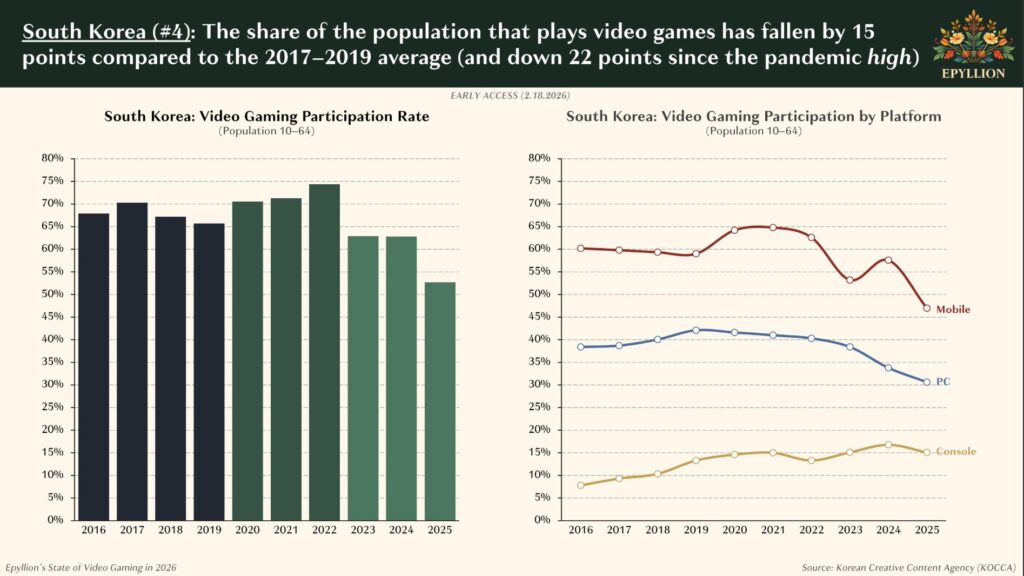
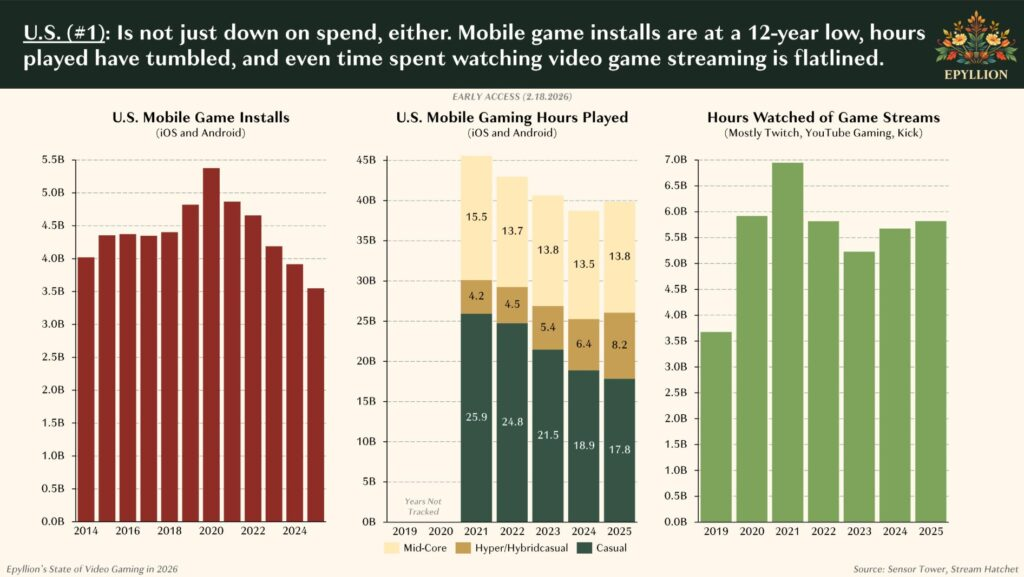
According to Matthew Ball, one of the most cited analysts in the gaming industry, the number of people who actively play games has declined in several major markets. His data covers eight large gaming countries, including the United States, Japan, and South Korea.
In the United States, the percentage of people who play games has dropped by around 2.5 to 4 percent compared to the pre pandemic period. Canada shows an even sharper decline, with nearly one in six players stepping away from gaming altogether. These figures challenge the long held belief that gaming continues to grow year after year.
The Real Competition Is Not Other Games
The gaming industry is no longer competing only with new releases or rival studios. Instead, it now fights against what many analysts call “time sink apps.”
Platforms such as TikTok, AI chat tools, short form video services, and subscription based content platforms like OnlyFans are designed to capture attention instantly. Notifications, infinite scrolling, and algorithm driven feeds pull users in before they even consider launching a game.
As a result, gaming often loses the first battle of the day. By the time users finish scrolling or chatting with AI tools, their available free time has already disappeared.
Fewer Players Lead to Heavier Monetization
A major consequence of this trend is increased pressure on monetization. When player numbers shrink but revenue targets remain unchanged, publishers shift the burden to those who still play.
This shift explains why many modern games push aggressive monetization systems. These include heavier gacha mechanics, frequent paid passes, and premium upgrades. Over time, this approach damages player trust and enjoyment. Consequently, even more players walk away, creating a dangerous feedback loop.
Core Demographics Are Under Siege
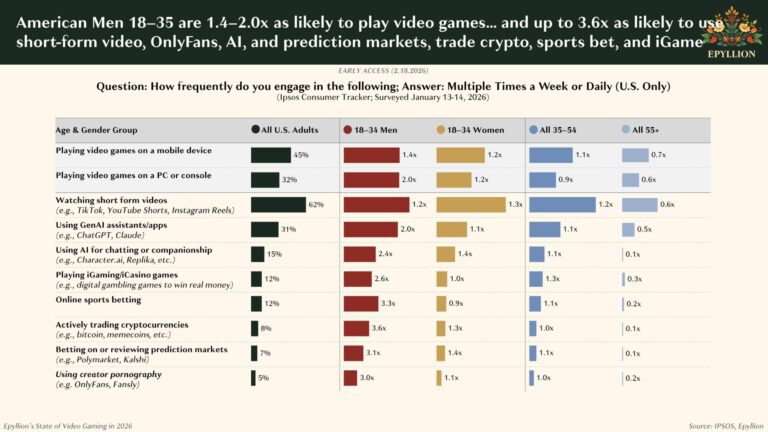
The most competitive demographic is men aged 18 to 35. This group forms the backbone of the global gaming market. However, it is also the same audience that spends the most time on TikTok, AI tools, and short form video platforms.
Because these services deliver instant gratification with minimal effort, they often outperform games that require longer sessions and deeper engagement. This reality forces game developers to rethink how they attract and retain players in a fragmented attention economy.
Gaming Is Not Worse, the World Is Faster
Despite the alarming numbers, the core problem is not declining creativity or weaker game design. In fact, more high-quality games release every year. The real issue lies outside gaming itself.
Digital entertainment has become faster, more aggressive, and more efficient at consuming time. As people juggle work, social media, AI tools, and streaming content, gaming becomes just one option among many.
If the industry cannot adapt to shorter attention spans and changing habits, this player decline may accelerate further.
Source: PC Gamer