Google is gearing up to return to the smart glasses market with two next generation AI powered models set for a global release in 2026.
Google is moving forward with a major comeback in the wearable AR segment as it works on two new smart glasses designed to compete directly with the rapidly growing AI eyewear market. The company confirmed that both models are planned for launch in 2026, signalling a strategic push to challenge leading AR products currently shaped by strong competitors including Meta, Snap, and emerging industry players developing their first consumer ready devices. Google’s new lineup consists of two distinct approaches, one featuring a built in display and another that operates entirely through voice interactions. The initiative also includes collaborations with major design and technology partners such as Samsung Electronics, Warby Parker, and Gentle Monster, aiming to create smart glasses that look stylish while offering advanced utility for everyday users.
Beyond its in-house products, Google is also strengthening its partnership strategy by enhancing software experiences across partner hardware. The company confirmed that its next wave of software innovations will roll out to Samsung’s Galaxy XR glasses, including an upgraded Travel Mode that improves usability inside cars and airplanes. This enhancement responds to early user feedback pointing out that previous interface movement often felt unnatural during travel, prompting Google to refine motion handling for a more stable immersive experience.
Competition in the AI and AR smart glasses space has become more intense than ever as tech giants accelerate development cycles. Meta continues releasing frequent updates for its Ray Ban and Oakley lines, while Snap is preparing its first consumer AR glasses and Apple is expected to enter the arena in a similar timeframe. These conditions create a fast evolving landscape that requires Google to deliver meaningful improvements in comfort, performance, and utility to stand out.
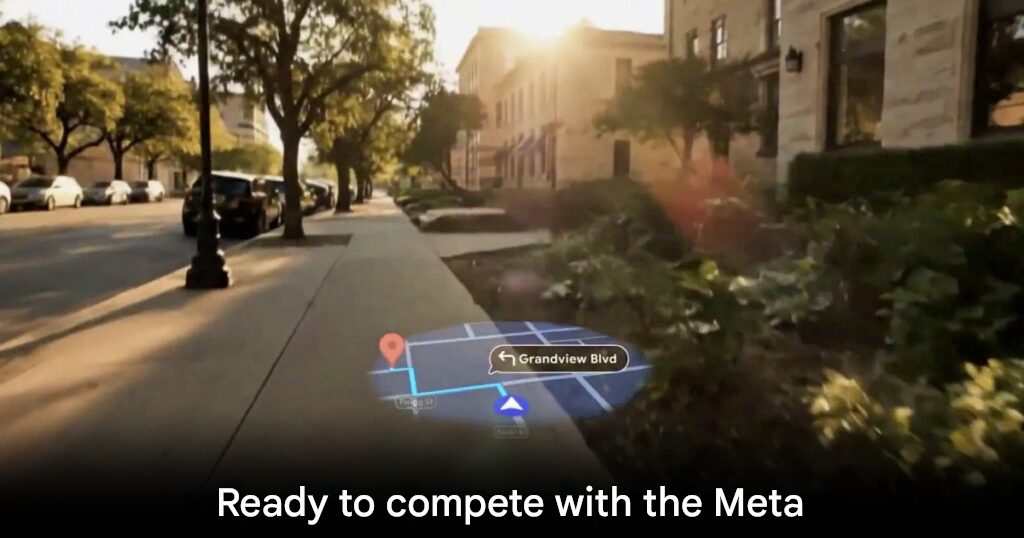
Google emphasized that its renewed approach is more measured and deliberate compared to the earlier Google Glass era, which struggled due to bulky design, short battery life, and significant privacy concerns. Early prototypes of the new models include both single display and dual display versions capable of showing AR overlays such as navigation directions, real time meeting tools, and instant language translation appearing as either captions or spoken output based on user preference.
One of the most notable developments is the collaboration with Xreal under the working title Project Aura. The device runs on Android XR similar to Galaxy XR but features a much slimmer profile that requires an external battery to operate. It offers an expansive 70 degree field of view with advanced hand tracking that mirrors the intuitive interface used in partner devices. These details show Google’s experimentation toward achieving a balance between lightweight portability and high level performance.
Google is also preparing new cross platform features by introducing PC Connect, a software solution that allows any Windows computer to link with Galaxy XR for virtual screen mirroring and gaming. This broadened compatibility removes previous limitations that restricted the feature to select hardware. Additional updates include Likeness avatars that generate highly realistic facial scans for more expressive virtual interactions. These features will begin early testing immediately as Google gears up for its major 2026 product unveiling.